
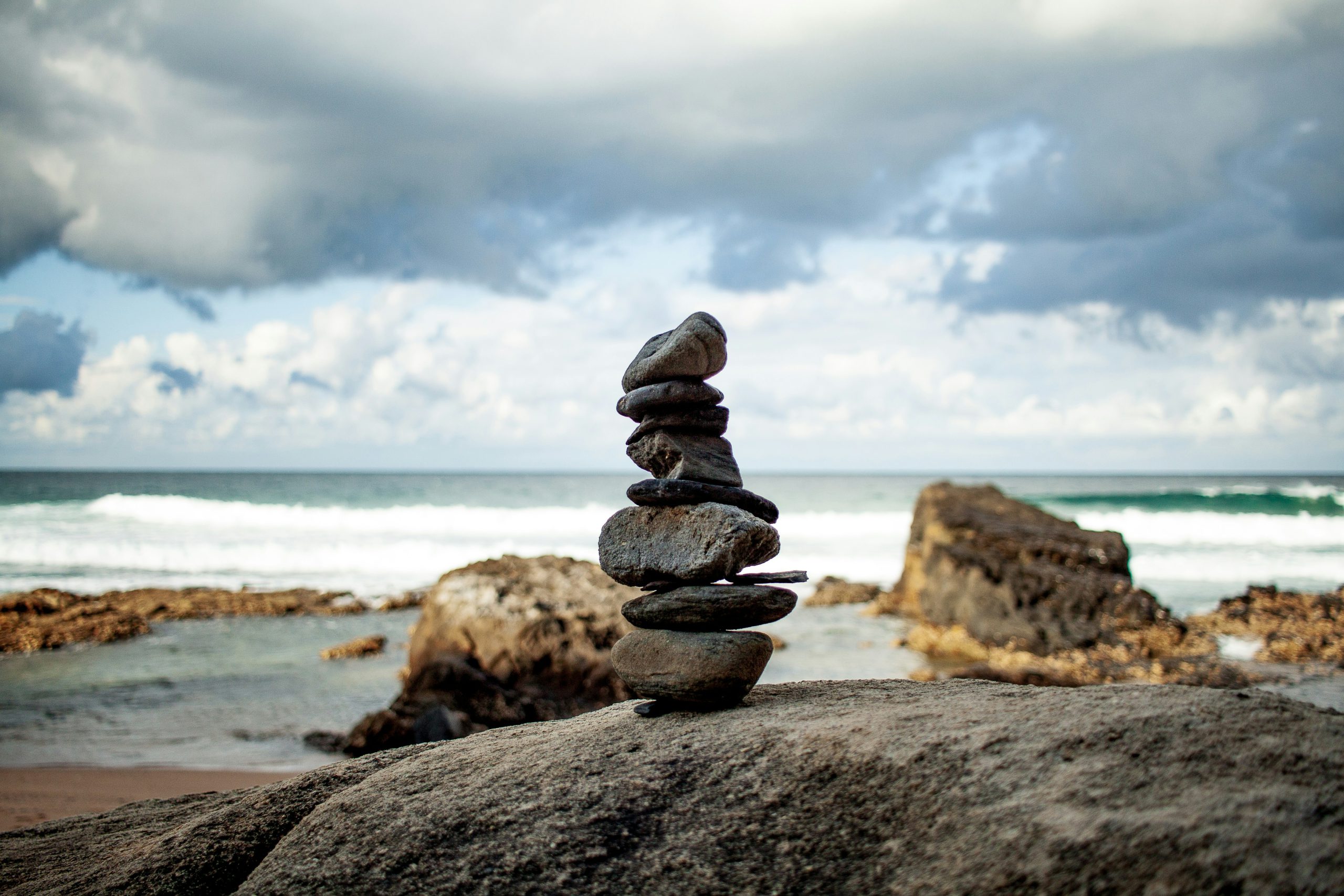
The edge of chaos is the position of equilibrium between order and disorder. It is here, in this subtle balance, that creative thinking arises, innovation is born, and adaptability becomes possible. Too much order, and life becomes rigid. Too much chaos, and it collapses into confusion. But in equilibrium, a fertile ground appears — a playground for intelligence.
The edge of chaos shows us that disorder has lessons, and that resilience grows in uncertainty. But if chaos is the teacher, then equilibrium is the classroom. It is here, at the delicate balance between order and disorder, that creativity flourishes, adaptability strengthens, and intelligence awakens.
Too much order breeds rigidity. Too much chaos collapses into confusion. But at the position of equilibrium, life becomes fertile ground — a field where complexity, growth, and transformation can unfold.
The Vedic View of Balance
The Vedas describe the universe as upheld by ṛta — the cosmic order that sustains harmony. Yet this order is not fixed; it is a living rhythm. Day follows night, creation follows dissolution, stillness follows movement. Equilibrium is not stasis but a dynamic flow where opposites hold each other in tension.
Within us, this balance is reflected in the three guṇas: sattva (clarity), rajas (activity), and tamas (inertia). When tamas dominates, life becomes stagnant. When rajas overwhelms, we burn out in restless activity. But when sattva steadies and harmonizes them, equilibrium arises — not as perfection, but as a state where growth becomes possible.
The Playground of Complexity
Modern science echoes this Vedic intuition. Complex adaptive systems — from ecosystems to economies — thrive at the threshold between rigidity and collapse. Too much order suppresses diversity; too much chaos prevents stability. But balance fosters resilience.
So too with human life. A mind clinging to rigid certainty stops evolving. A mind drowning in disorder loses its way. But a mind at equilibrium — open, steady, yet flexible — becomes a playground for creativity and intelligence.
Equilibrium in the Self
The Bhagavad Gītā describes the sthitaprajña — one of steady wisdom — who is unmoved by pleasure and pain, success and failure. Such a person is not emotionless, but anchored. Equilibrium in the self does not mean absence of struggle, but presence of awareness.
From that center, clarity arises. From clarity, right action follows. And from right action, life aligns with dharma — the principle that sustains harmony within and without.
A Personal Takeaway
To seek equilibrium is not to eliminate chaos, nor to cling to rigid order. It is to live in the space where both meet — where resilience is tested, wisdom is sharpened, and creativity is born.
Equilibrium is not an escape from life’s turbulence, but the art of moving with it. And in that movement, we discover the balance that allows us to grow.
The edge of chaos shows us that disorder has lessons, and that resilience grows in uncertainty. But if chaos is the teacher, then equilibrium is the classroom. It is here, at the delicate balance between order and disorder, that creativity flourishes, adaptability strengthens, and intelligence awakens.
Too much order breeds rigidity. Too much chaos collapses into confusion. But at the position of equilibrium, life becomes fertile ground — a field where complexity, growth, and transformation can unfold.
The Vedic View of Balance
The Vedas describe the universe as upheld by ṛta — the cosmic order that sustains harmony. Yet this order is not fixed; it is a living rhythm. Day follows night, creation follows dissolution, stillness follows movement. Equilibrium is not stasis but a dynamic flow where opposites hold each other in tension.
Within us, this balance is reflected in the three guṇas: sattva (clarity), rajas (activity), and tamas (inertia). When tamas dominates, life becomes stagnant. When rajas overwhelms, we burn out in restless activity. But when sattva steadies and harmonizes them, equilibrium arises — not as perfection, but as a state where growth becomes possible.
The Playground of Complexity
Modern science echoes this Vedic intuition. Complex adaptive systems — from ecosystems to economies — thrive at the threshold between rigidity and collapse. Too much order suppresses diversity; too much chaos prevents stability. But balance fosters resilience.
So too with human life. A mind clinging to rigid certainty stops evolving. A mind drowning in disorder loses its way. But a mind at equilibrium — open, steady, yet flexible — becomes a playground for creativity and intelligence.
Equilibrium in the Self
The Bhagavad Gītā describes the sthitaprajña — one of steady wisdom — who is unmoved by pleasure and pain, success and failure. Such a person is not emotionless, but anchored. Equilibrium in the self does not mean absence of struggle, but presence of awareness.
From that center, clarity arises. From clarity, right action follows. And from right action, life aligns with dharma — the principle that sustains harmony within and without.
To seek equilibrium is not to eliminate chaos, nor to cling to rigid order. It is to live in the space where both meet — where resilience is tested, wisdom is sharpened, and creativity is born.
Equilibrium is not an escape from life’s turbulence, but the art of moving with it. And in that movement, we discover the balance that allows us to grow.
In your own life, where do you feel pulled too far into order, or overwhelmed by chaos? What small shift could bring you closer to equilibrium today?
Leave a Reply