
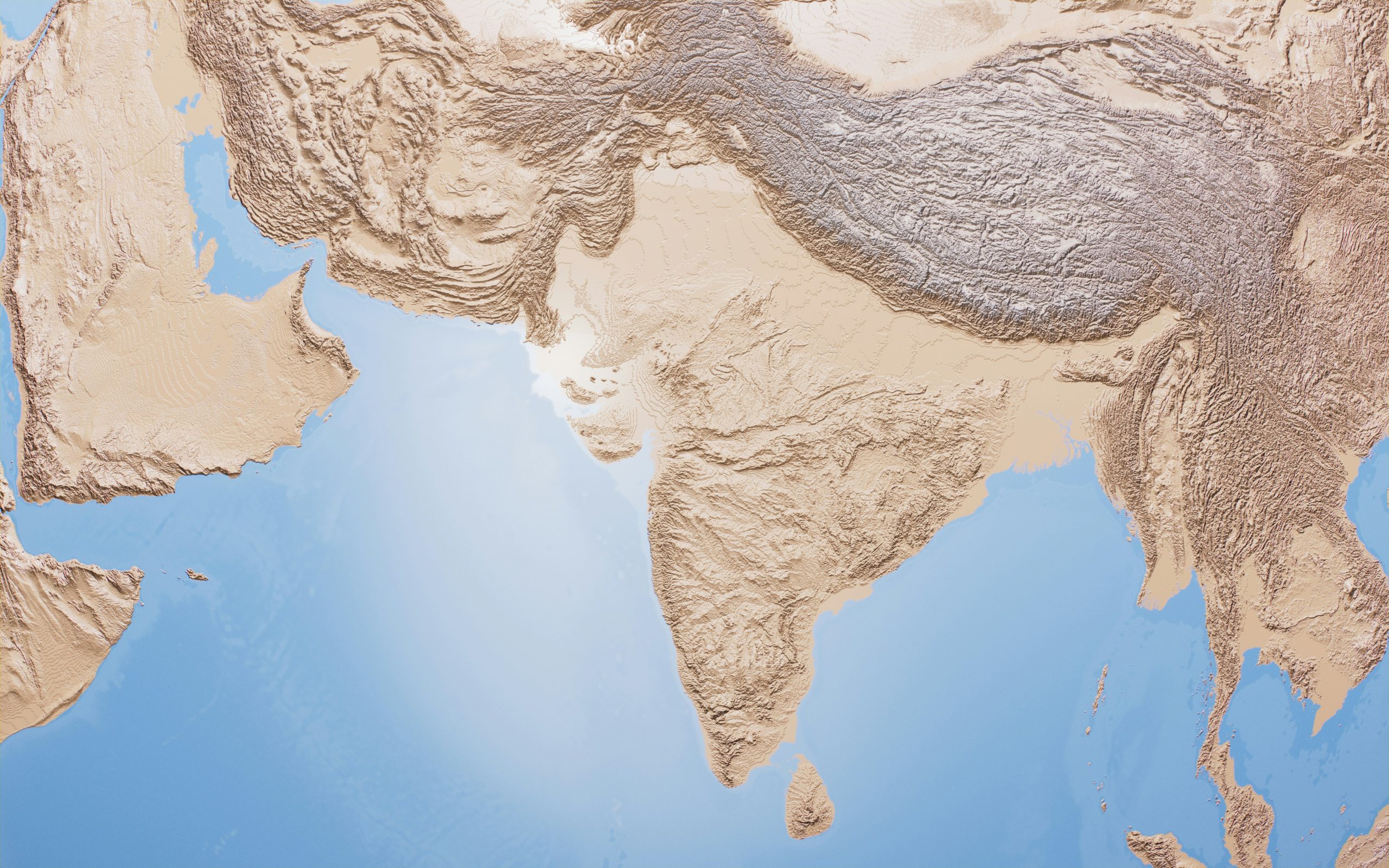
1947. The 15th of August. The stroke of midnight.
The pages of Indian history turned, and a new chapter began — an era of independence, hard-earned and heavy with consequence.
As the rest of the world slept, India awoke — not just to freedom, but to responsibility. The dawn was radiant, but the night before it was dark with loss. For while the flag rose over a free nation, the subcontinent was divided by borders that displaced fifteen million people and claimed nearly one and a half million lives.
Independence came not as a celebration alone, but as a sacrifice.
The Birth of a Nation
After nearly two centuries of colonial rule, India emerged scarred yet determined. The British Empire’s “divide and rule” policy reached its final, tragic climax in the partition — and yet, from that painful fracture, a new country took shape.
The foundation stone of modern India was laid not in marble but in endurance. A people speaking more than twenty-two languages, diverse in belief, tradition, and temperament, had to learn the art of unity once again.
The value of Swadeshi, once the heartbeat of the freedom movement, began to fade as the euphoria of liberation met the harsh realities of reconstruction. The nation’s first challenge was not to celebrate independence, but to understand it — to translate it from a political event into a cultural consciousness.
The Weight of Expectation
In 1947, India’s land mass was ten times the size of Japan, and its population — more than 350 million — was burdened by poverty, famine, and fragmentation. Yet the world watched with cautious hope. Could this civilization, which had endured centuries of invasion and foreign rule, rise again as a democratic and self-reliant nation?
It was, and remains, one of history’s most remarkable experiments: the rebirth of a civilization that chose dialogue over dominance, unity over uniformity, and faith over fear.
The Vedic Echo of Freedom
The Vedas speak of ṛta — the universal order, the rhythm of truth that sustains all life. Freedom (mukti) in the Indian tradition has never been merely political; it is the liberation of spirit, the freedom to seek, to express, to evolve.
India’s tryst with destiny was not only about self-rule; it was about self-realization.
From the ashes of empire arose the chance to reclaim an older truth — that strength lies in diversity, that progress must be rooted in compassion, and that independence without integrity is hollow.
The Continuum of Awakening
More than six decades later, that tryst continues. Independence was not a conclusion; it was a beginning. Each generation inherits both the freedom and the responsibility to redefine what it means.
True freedom is not the absence of restraint, but the presence of purpose. It is not the flag that waves above us, but the spirit that moves within us.
India’s journey — from division to democracy, from poverty to potential — is not complete. It is evolving, guided by the same question that echoed in 1947: What shall we make of our freedom?
As I write this, I see the story of India as a mirror of the human spirit itself. Every person, like every nation, must experience struggle, rediscover values, and awaken to purpose.
The tryst with destiny is not a moment in history — it is a call that continues to sound, asking each of us to rise to our highest potential, to honor the sacrifices before us, and to build the future that freedom demands.
What does freedom mean to you — a right inherited, or a responsibility renewed each day?
Leave a Reply