Edge of chaos
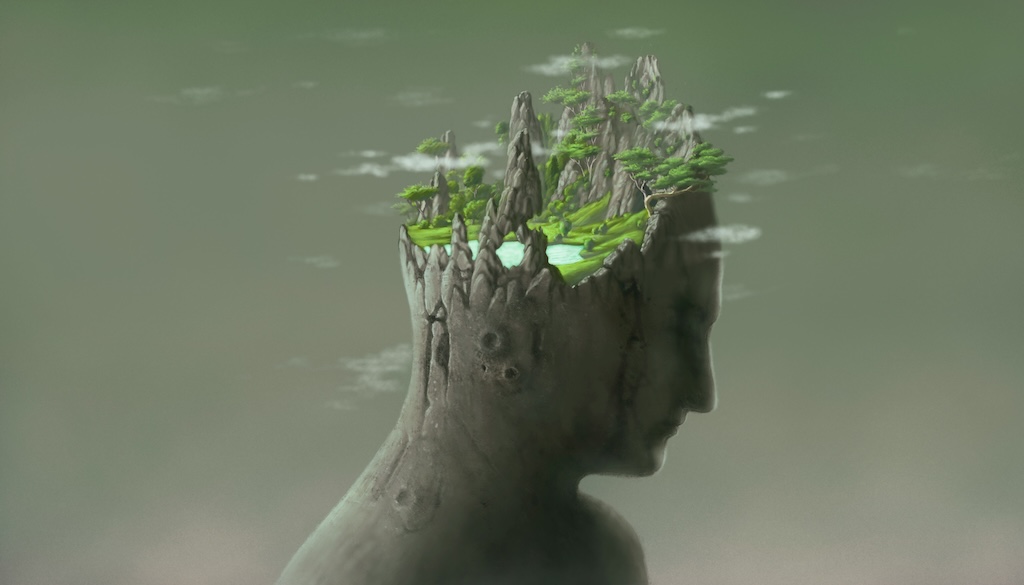
To walk on the edge of chaos is to accept that our lives are open, uncontrolled, bound to the unexpected. Always facing a multitude of threats; some known, some unknown. Yet it is also to acknowledge that our acts have consequences and so to discover responsibility. It is to use the experience of life as a search for opportunity to learn and become.
To walk on the edge of chaos is to accept that life is open, unpredictable, and bound to the unexpected. We face a multitude of threats — some known, others unknown. Yet it is precisely here, on this razor’s edge, that responsibility awakens. For every act has consequences, and within uncertainty lies the opportunity to learn, to adapt, and to grow.
Chaos as Teacher
We often fear chaos, imagining only destruction. But the Vedic vision sees creation itself as born of turbulence. The Nasadiya Sukta of the Ṛgveda describes the cosmos emerging from a state where neither order nor disorder was fully formed — a primal ambiguity. Out of that tension, existence took shape.
Chaos, then, is not the enemy but the teacher. It humbles us, shakes us out of complacency, and forces us to discover resilience. Like a storm that clears the air or a fire that renews a forest, chaos destroys but also prepares the ground for renewal.
The Balance of Forces
In Vedic thought, all of existence is woven from the play of three guṇas: sattva (clarity), rajas (activity), and tamas(inertia). None can be eliminated, for together they form the tapestry of reality. When tamas dominates, there is stagnation; when rajas overwhelms, there is restlessness. But at the edge between these forces, intelligence and creativity arise.
To walk on the edge of chaos is to live in this delicate balance — not overwhelmed by darkness, not lost in restlessness, but alert, aware, alive.
Chaos and Human Responsibility
Disasters, wars, and disruptions remind us how fragile our world can be. But they also reveal the strength of human compassion and the power of responsibility. The tsunami of 2004, for example, brought devastation — yet it also drew people together across borders, inspiring acts of courage and selflessness. Out of chaos came reminders of our shared humanity.
Chaos strips away illusions of control, leaving us face to face with choice. We cannot master every force, but we can decide how we respond. It is here that responsibility and freedom meet.
The edge of chaos is not a place to avoid, but a space to inhabit with awareness. It is the testing ground of the spirit, where fear becomes resilience and uncertainty becomes opportunity.
To live here is to accept the paradox of life: that order and disorder are not opposites to be conquered, but partners in creation. And it is in their dance that we grow.
When life feels uncertain, do you experience it as threat or as teacher? How can you stand on the edge of chaos with awareness, rather than fear?