Corrosion, Not dents
1945. August 9th.
Three days after the bombing of Hiroshima, the Americans struck again — this time on Nagasaki. On August 15th, two years before India would awaken to freedom, Japan surrendered to the Allied powers. The Second World War ended, but not before claiming more than a hundred and fifty thousand lives and forever changing the course of history.
To a nation that had stood strong in war, the bombings were not just destruction — they were disintegration. Japan suffered a trauma that seared itself into the conscience of the world. In that single moment, mankind realized that if war were ever to escalate again, it would not end with surrender — it would end with extinction.
Dents and Corrosion
Economists often debate the impact of those nuclear attacks on Japan’s economy. The physical damage was catastrophic, yes — but it was localized. The rest of Japan’s systems — its discipline, its social fabric, its sense of collective responsibility — remained intact.
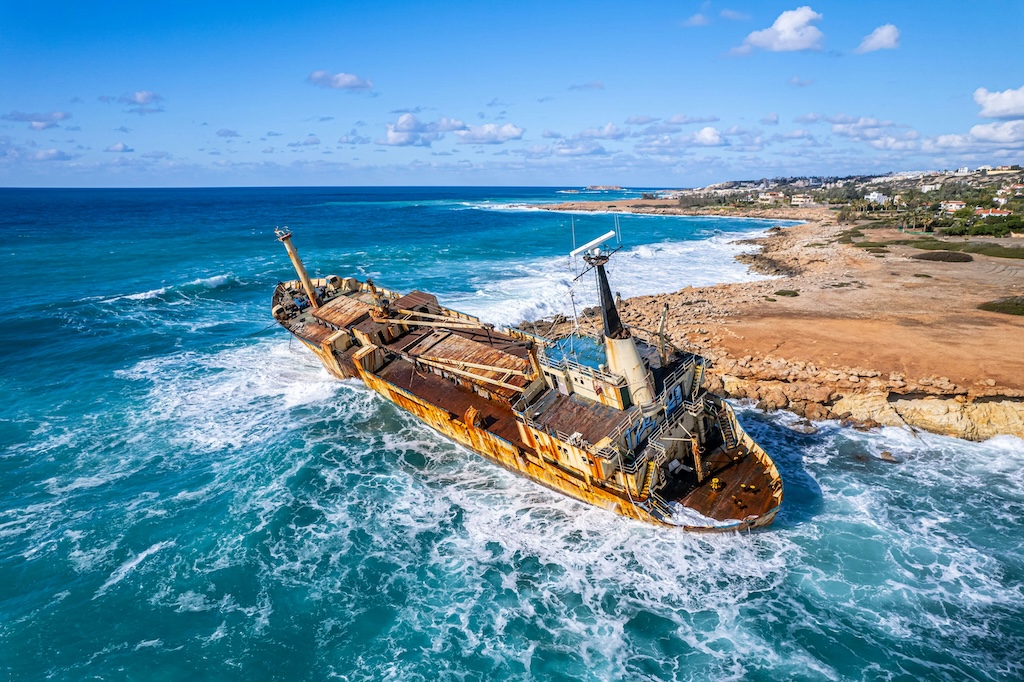
India’s story, by contrast, was not one of dents but of corrosion.
For two centuries, the British Raj extracted not just resources, but spirit. The corrosion was cultural, economic, and psychological. It crept slowly through every institution — trade, agriculture, education, governance — weakening the foundation of an ancient civilization.
So when India rose to independence in 1947, it did not emerge from ruins like Japan did. It emerged from exhaustion.
The comparison is not to diminish the horror of Hiroshima and Nagasaki, but to acknowledge the different natures of loss. Japan was struck twice, overnight. India was drained continuously, for two hundred years.
One nation faced annihilation; the other, attrition.
Rising from the Ashes
And yet, both nations share one remarkable trait: resilience.
Japan rebuilt itself within decades. From nuclear dust, it forged an economic miracle. By the 1970s, it had become a technological powerhouse — not through conquest, but through craftsmanship, culture, and relentless efficiency.
India’s recovery, however, was more complex. At independence, it had a population of 350 million, scattered across a subcontinent ten times the size of Japan. Its losses were diffuse — famine, partition, poverty, illiteracy — spread like invisible rust across every corner of society.
It took India more than forty years to even begin its renewal. The closed economic policies of the early decades were necessary to stabilize, but they also slowed growth. Only in the 1990s, with liberalization, did India finally begin to open its arms to the world again — allowing innovation, investment, and information to re-enter its bloodstream.
That was our Hiroshima moment — but of rebirth, not destruction.
The Difference in Recovery
Japan’s dent could be repaired by reconstruction. India’s corrosion required reawakening.
You can fix a dent with metal and skill. But to reverse corrosion, you must cleanse, rebuild, and renew from within. That is what India has been doing — not in decades, but in cycles.
Where Japan rebuilt its industries, India has had to rebuild its identity. Where Japan engineered precision, India has engineered possibility.
And while Japan’s rise was swift, India’s has been spiritual — measured not just in GDP or exports, but in the slow return of confidence, creativity, and consciousness.
A Reflection on Civilization
Fifty years after independence, when Britain handed Hong Kong back to China in 1997, the world marveled at how far Japan had come. Few noticed how far India had traveled — quietly, persistently, inwardly.
Our growth has never been about velocity; it has always been about volume — of people, of ideas, of dreams. It is the growth of a civilization rediscovering itself after centuries of corrosion.
And today, as we step further into an age of innovation and digital power, India’s greatest challenge — and opportunity — remains the same:
To ensure that our newfound speed does not corrode our substance again.
When nations or people recover from loss, what matters more — how fast they rebuild, or how deeply they renew?