The Technology
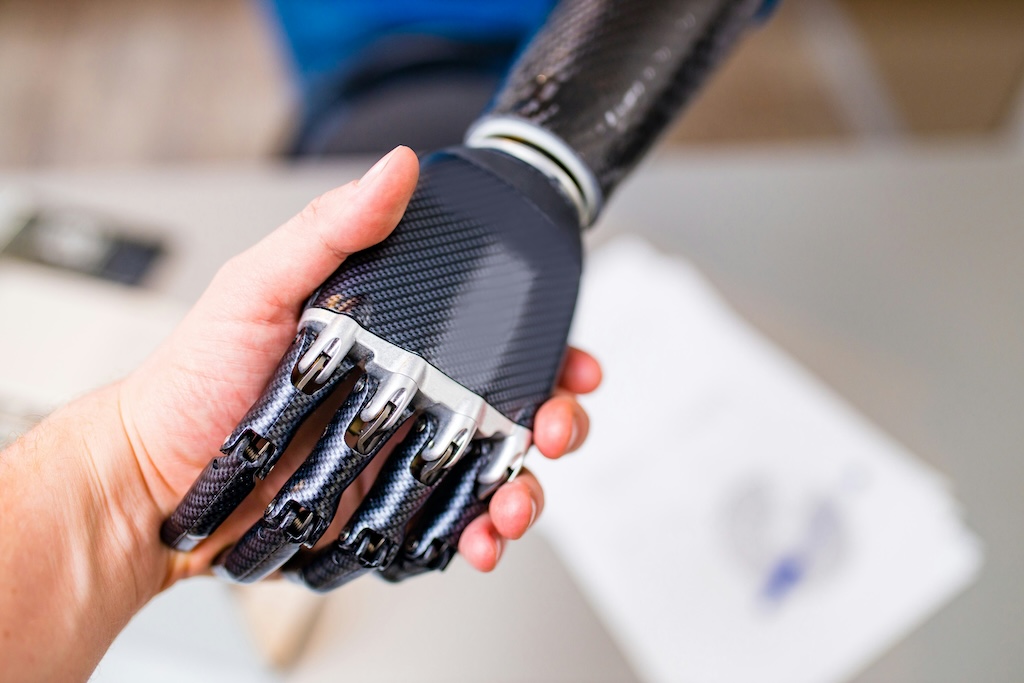
Technology, at its essence, is not machinery — it is mind made visible.
It is the living bridge between inspiration and the people, between the spark of an idea and its manifestation in the world.
True technology does not dominate. It enables.
It should act as the conduit through which knowledge flows freely, and wisdom finds form.
The Purpose of Technology
Technology should act as an enabler between the inspiration and the people.
It should never constrain growth; it should engineer resources in a way that amplifies human potential. The true purpose of technology is to transcend the boundaries of social, economic, or political control — to become the flowthrough which information, creativity, and consciousness circulate without obstruction.
It should serve as a means to an aim, never the aim itself.
When we devise technology that connects human beings above the boundaries of language, culture, gender, tradition, education, skill, or motivation — when technology unites rather than divides — the media will finally be complete.
The highest education is that which does not merely give us information, but makes our life in harmony with all existence.
— Rabindranath Tagore
Technology as a Living System
The technology of the future will not merely evolve in versions or updates; it will evolve in awareness.
It will adapt continuously to the ever-growing needs of knowledge.
It will operate with low latency toward change — responsive to the pulse of creativity and collective need — and retain the highest degree of wisdom.
Such technology will foster every form of art in its purest form, enabling not just the spread of knowledge but the dissipation of wisdom.
It will embed truth into its design, ethics into its protocols, and empathy into its interfaces.
The very use of such technology will ensure right application, for its principles will be woven into the platforms themselves — self-governing through virtue rather than control.
When technology integrates inner order with outer innovation, governance becomes redundant, and policies transform into principles.
Beyond Ownership and Control
Above and beyond the battles of open-source and proprietary, freeware and copyright, multiple standards and corporate monopolies — there lies the true beginning of technology.
Technology that provides freedom —
freedom of thought,
freedom of expression,
freedom of action.
This freedom is not chaos. It is the freedom to think without fear, to create without borders, to communicate without distortion.
When technology liberates the human spirit, it allows consciousness to expand beyond the constraints of social, economic, and cultural existence.
In that expansion, mankind fulfills its inherent dharma: the drive to evolve — not just materially, but spiritually.
“When the mind is still, the universe surrenders its truth.”
— Upanishadic Thought
The Spiritual Architecture of Connection
In its purest form, technology is not the machine; it is the medium of connection.
Every circuit, every network, every line of code is an external reflection of an internal truth — the Vedic idea of Vasudhaiva Kutumbakam, the world as one family.
The networks we build externally are echoes of the network we are already part of internally — a web of thought, intention, and energy that connects every living being.
When technology is aligned with this awareness, it transcends functionality and becomes spiritual infrastructure.
It does not simply move information; it moves understanding.
The Technology of Dharma
In the Bhagavad Gita, Krishna says:
“To work alone is your right, but never to its fruits. Let not the fruits of action be your motive, nor let your attachment be to inaction.”
This teaching is as relevant to creators and technologists as it is to seekers.
To create technology not for profit, but for purpose — not for control, but for consciousness — is the dharma of the innovator.
When innovation is guided by inner stillness, technology becomes the new karma yoga — work done selflessly for the good of all.
The machines we build, the software we write, the systems we design — each is an opportunity to align intention with creation.
That is the true spirituality of technology.
Engineering Enlightenment
The next leap in human progress will not come from faster processors or smarter machines. It will come from inner engineering — the conscious alignment of technology with ethics, empathy, and evolution.
Artificial Intelligence without spiritual intelligence will only multiply error.
Automation without awareness will only accelerate imbalance.
The future will belong to those who engineer balance — where science serves soul, and systems serve humanity.
When technology is built upon truth, compassion, and inclusivity, it will cease to be a tool and become a teacher.
Toward the Complete Media
When that day comes — when knowledge flows freely, when differences dissolve, when technology amplifies empathy instead of ego — the media will truly be complete.
It will not only transmit signals but also elevate consciousness.
It will not merely connect devices but unite destinies.
And the code that drives it will not just be syntax — it will be sacred geometry written in light, reflecting the architecture of the universe itself.
The Prayer of the Innovator
May we build systems that free the mind, not bind it.
May our inventions serve humanity, not enslave it.
May our code carry clarity, our machines humility, and our networks grace.
For technology, when seen rightly, is not the creation of man —
it is the manifestation of divine inspiration through human hands.
And when that happens, creation itself becomes meditation.